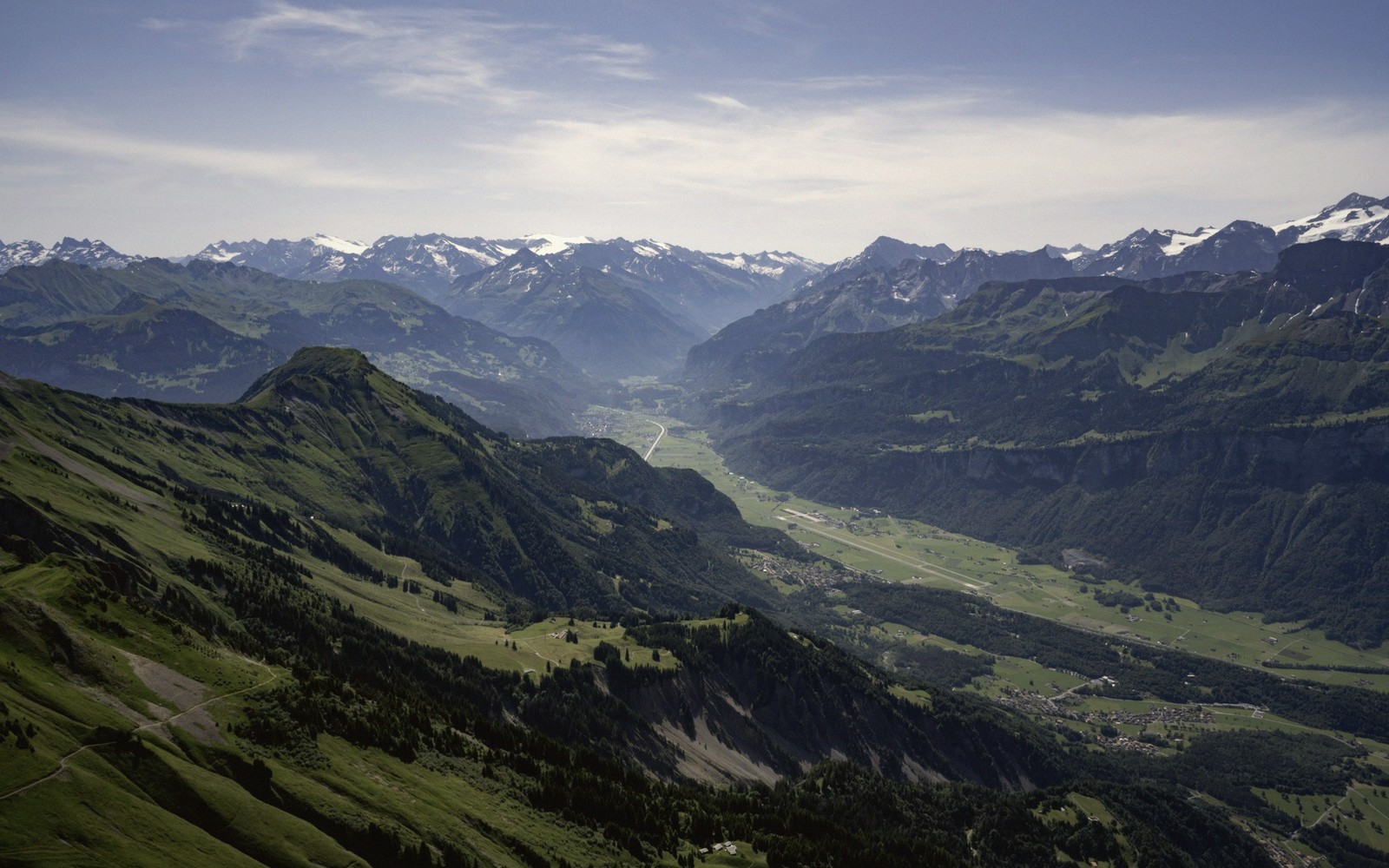
France's great ski valley, glimpsed between runs
Stand anywhere on the upper plateau at Saint-François-Longchamp and the view south is theatrical. The valley floor lies a full kilometre beneath you, a thin silver thread of the Arc river caught between walls of mountain that seem to lean inward from both sides. That long trench is the Maurienne — and the more you learn about it, the harder it is to look away.
1A valley of improbable depth
The Maurienne is one of the longest valleys entirely within France, running roughly 130 kilometres from the Col du Mont Cenis on the Italian border down towards Aiguebelle, where it opens out into the wider plain. The Arc carves through it with no particular haste, collecting side tributaries — and side valleys — all the way. From the resort, the perspective is almost aerial: the autoroute and the railway line, both of which thread through Savoie toward the Fréjus tunnel and Italy, look from up here like pencil marks on a contour map.
That railway is worth pausing on. The Maurienne line has been a vital artery since the nineteenth century, connecting France to its southeastern neighbour and carrying everything from holidaymakers and freight to, famously, troops. In the First World War the line ran ceaselessly; in more peaceable times it carries skiers directly to the valley floor, from where a transfer road climbs up to the resort. Arriving by train to the Maurienne and then watching the valley drop away beneath the road is one of the better arrivals in French skiing.
2History pressed into the rock
The valley's layered past shows itself in unexpected ways. Saint-Jean-de-Maurienne, the valley's principal town, possesses one of the finest early-medieval cathedrals in Savoie — a quietly startling thing to find in what feels, from a distance, like pure industrial geography. The valley was for centuries a corridor of strategic consequence: Roman roads, Savoyard dukes, Napoleonic engineers and modern tunnel-builders have all left marks. The Montgellafrey hamlet, visible on the slopes beneath the resort, is a reminder that this landscape was inhabited and farmed long before the first chairlift was bolted together — stone walls and larch-timber barns that predate skiing by centuries.
To the north, across the valley from the resort's balcony, the Lauzière massif rises in a clean, forested wall. It is wilder and less developed than the ski country above you, a place of forest roads and long ridgelines that see few visitors. And dividing the Lauzière from the ski terrain of Saint-François-Longchamp is the Col de la Madeleine, that high pass at roughly 2,000 metres which every serious cyclist knows by reputation — a Tour de France climb of genuine brutality that begins in the valley heat and ends in thin, cold air.
3The valley in winter light
In winter the Maurienne floor often lies in shadow while the resort basks. Cloud can pool down there for days, a grey lid pressed over the autoroute and the river, while the slopes above sit in full Savoyard sun. It is one of the defining paradoxes of altitude: the valley is where life historically happened, where towns grew and roads were built, yet the mountain above it offers the light, the space and the silence.
That contrast is never more vivid than at the end of an afternoon run. The sun tilts west, the valley below fills with a blue-grey haze, and the lights of the small towns begin to prick through it while you are still standing in brightness. The Maurienne, from up here, looks exactly like what it is: a great corridor of European history, still running.