The resort sits lightly on a landscape that was shaped long before the first chairlift turned.
1Old Ground
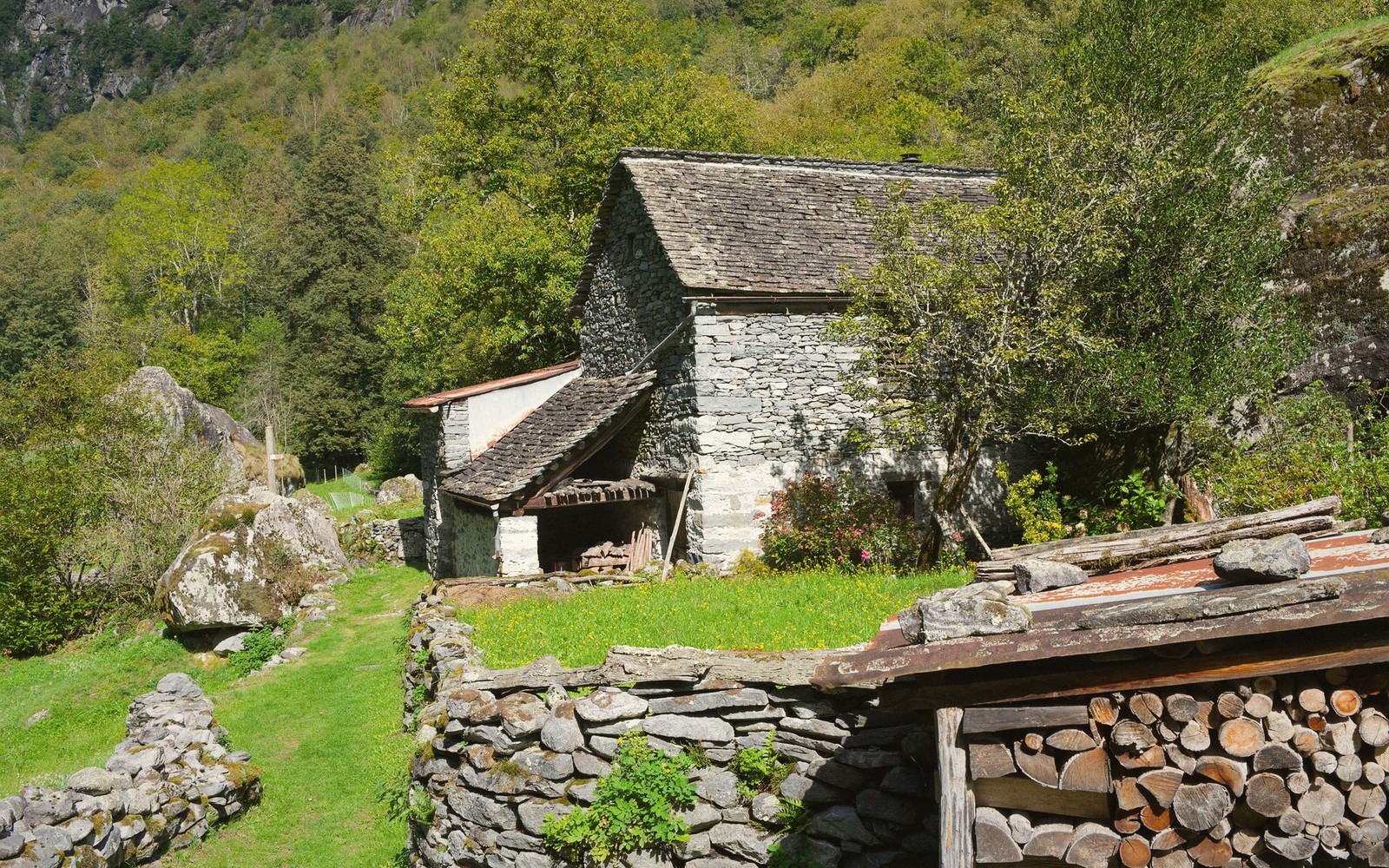
Drive up from the Maurienne valley and the resort infrastructure arrives quickly — car parks, apartment blocks, a cluster of lifts. But look to the sides of the road and the older story reasserts itself. Saint-François-Longchamp grew out of a scattering of agricultural hamlets clinging to these south-facing slopes, and Montgellafrey, a kilometre or so below the resort proper, is the one that time seems to have passed most gently over. Stone walls the colour of ash, timber balconies blackened by decades of sun and frost, a small church anchoring the whole thing against the hillside — it has the particular stillness of a place that still answers to the mountain rather than to the tourist calendar.
The hamlets up here were working farms long before the lifts arrived. Cattle grazed the high meadows through summer; hay was cut, dried and stored in the great dark barns whose silhouettes you still see against the treeline. Transhumance — the seasonal movement of herds between valley floor and alpage — shaped both the landscape and the architecture. The buildings were built to endure: thick stone bases to resist the weight of winter snow, wide overhanging eaves, and those deep-carved wooden galleries where fodder was stacked and the air circulated freely enough to dry it.