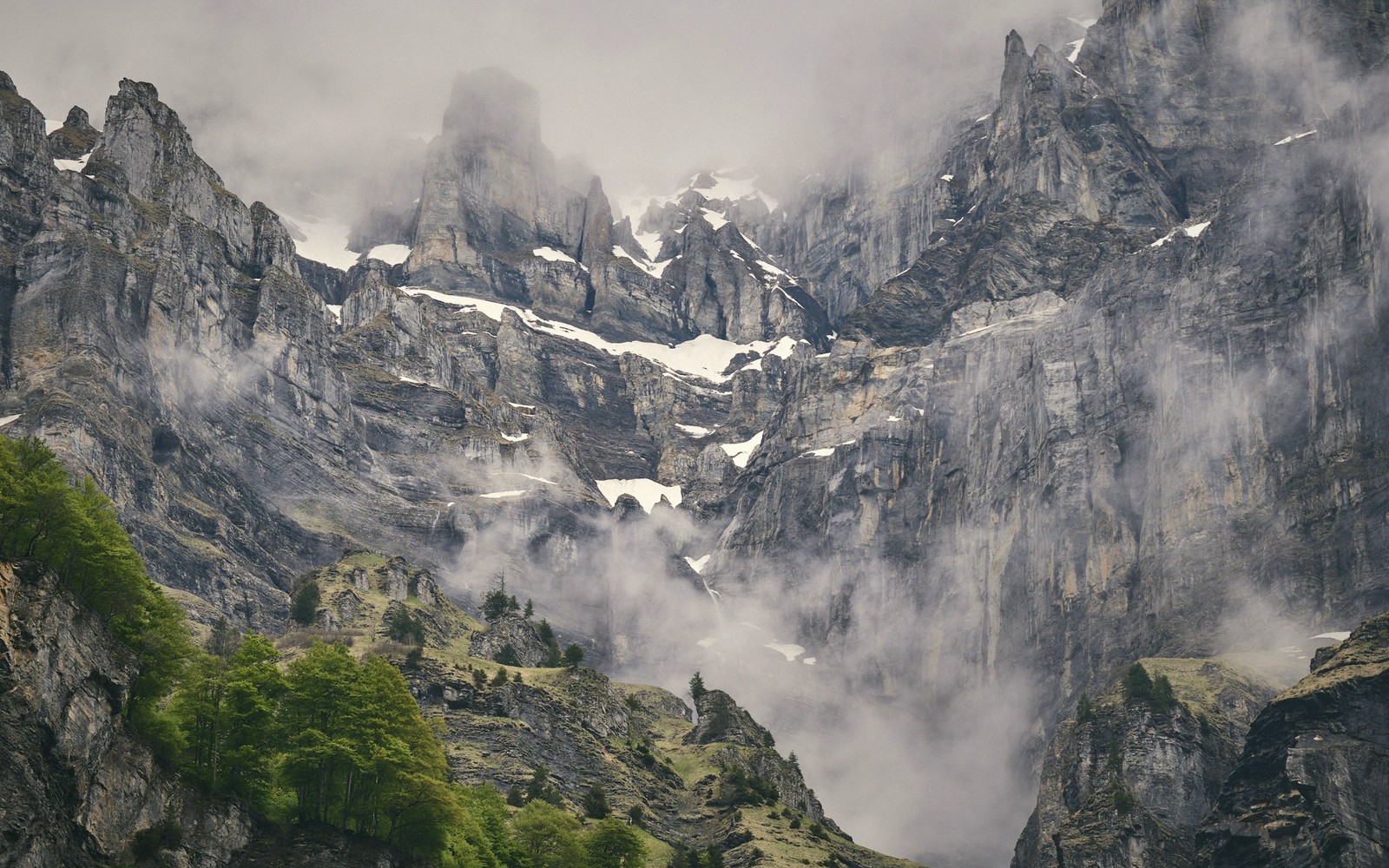
The rocky bulk across the valley rewards as much as the slopes behind you — and the road that climbs to meet it is a mountain journey in its own right.
1The Massif Across the Valley
Stand on almost any open piste at Saint-François-Longchamp and the view west stops you dead. Across the valley, a long, dark ridge fills the horizon: the Lauzière massif, a compact range of limestone and granite that belongs as much to the sky as to Savoie. It is not the Alps at their most theatrical — no glaciers, no serrated skyline — but it has a quality of stillness and self-containment that the bigger, more famous ranges often lack. The highest points push comfortably above 2 500 metres, and the flanks below them hold patches of old larch and dark spruce that change colour in a way you notice, season by season.
The massif borders two worlds. On its eastern side, visible from the resort, it drops sharply towards the Maurienne — the long trench of the Arc valley that carries the motorway and the railway south towards Italy. On its western flank, invisible from here, it shelters the valleys that feed into Valmorel and the Tarentaise. That double aspect gives the Lauzière an unusual character: it is a watershed not just of water but of atmosphere, of vernacular architecture, of the whole texture of mountain life.
For visitors staying in the resort, the massif is primarily a view and a reference point — something to orient yourself by on clear mornings, when the light picks out its ridges long before the sun clears the slopes behind you. But it is not simply scenery. The old hamlet of Montgellafrey, tucked into the hillside between the resort and the valley floor, sits at the foot of the massif's eastern edge, and the stone-built villages of the lower slopes tell you something about the hard, subsistence logic of mountain farming before ski tourism changed the economics entirely.