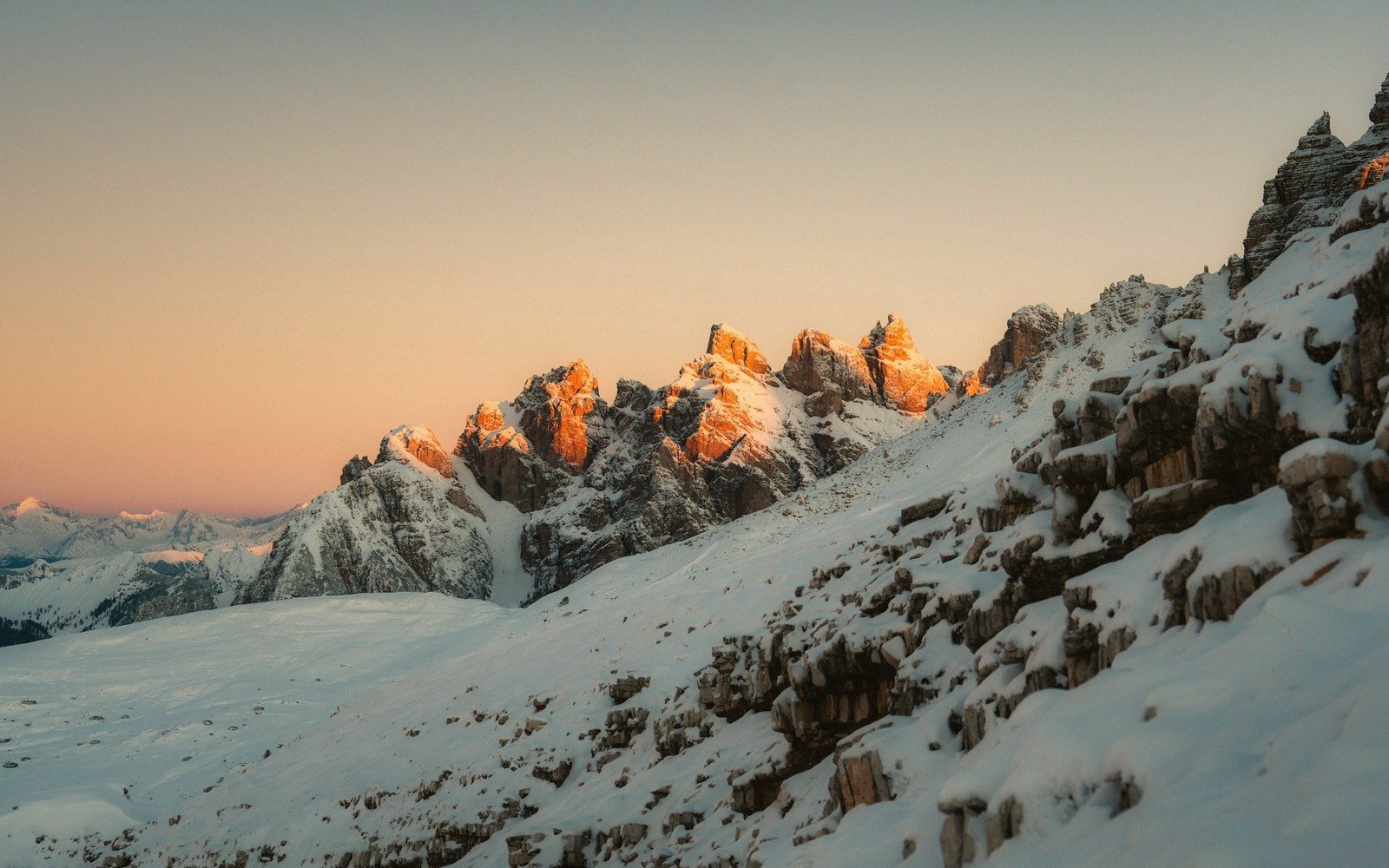
Leave the lifts behind and earn your turns — ski touring from Saint-François-Longchamp opens up a quieter, wilder side of the Lauzière massif.
1Into the Silence
There's a moment, maybe ten minutes above the last pylon, when the hiss of the lifts fades and the mountain reasserts itself. No ticking chairs, no Europop, no crowd shuffling at the bottom of a queue — just the rhythmic scrape of skins on snow, your own breath and, if you pause and look west, the long trench of the Maurienne unwinding toward the lowlands. Ski touring — la randonnée à ski in French — has always had a following here, and it's not hard to see why: Saint-François-Longchamp sits right at the foot of terrain that rewards those willing to walk for their turns.
The resort's position, perched on a south-facing shelf of the Lauzière massif above the Maurienne valley, gives ski tourers something rare — altitude gain without enormous approach. You begin in the village already at around 1 450 metres. The pisted domain climbs to roughly 2 550 metres, and beyond the top lifts, the ridge that separates the resort from the Col de la Madeleine opens up a world of quieter slopes, wider snowfields and, on a clear day, views that run from the Belledonne range to the first white teeth of the Mont Blanc massif.
2The Ground Underfoot
Most tourers leaving Saint-François-Longchamp start by skinning within or just above the groomed domain early in the day, when the snow is still firm and the light is low and golden on the east-facing couloirs of Les Envers. The runs through Le Grand Bois — the old larch and fir forest that drops back toward the lower village — can also be reached on the way down, the trees holding earlier season snow well and offering shelter when the wind picks up on the open ridge.
The classic objective is the high ground above the domain that bears directly toward the Col de la Madeleine. The col itself — one of the Alps' great road passes, famous from the Tour de France and closed to traffic through winter — is reachable on skis for those with the fitness and the right conditions, though this is a committing undertaking rather than a casual tour. Most visitors aim for the broad shoulder below the col's summit, where the terrain opens into wide, unarticulated snowfields and the sense of space becomes genuinely Alpine. Descending back into the resort from this point, you pick your own line through terrain that the lifts never touch.
The area around Montgellafrey, the old hamlet on the lower slopes above the valley, traces another quieter itinerary — skirting the edge of the domain and dropping through terrain that feels far removed from the piste map, ending at elevations where the farming landscape begins again.
3Before You Go
Ski touring here is not a guided-tour resort in the way that Chamonix or the Écrins are — there is no established touring centre, no rental-counter specifically configured for randonnée kit — but the basics are available. Touring bindings, skins and lightweight boots can be hired from resort ski shops, and guiding is available through qualified mountain guides (guides de haute montagne) who know the Lauzière terrain and can read its avalanche subtleties. Hiring a guide for a first tour in unfamiliar mountains is not timidity; it is the sensible, time-efficient way to see country that would otherwise take years of local knowledge to navigate safely.
Avalanche risk is real and must be taken seriously. The north and east-facing slopes that hold the best untracked snow are also the slopes most likely to be loaded after a storm cycle. Check the daily bulletin from Météo-France and the BRA (Bulletin de Risque d'Avalanche) before any excursion outside the pisted area, carry a full DVA kit (transceiver, probe, shovel) and know how to use it. The south-facing aspects that characterise much of the resort's own domain tend to consolidate more quickly but can also crust hard in strong sun — read conditions, not assumptions.
Timing matters too. Late winter and early spring — roughly February through to early April, depending on the snowpack — are the natural touring months: the days are long enough to make the most of the altitude gain, the snowpack has had time to settle, and the morning freeze gives the kind of crisp, supportive surface that makes skinning a pleasure rather than a slog through unconsolidated powder.
What the touring around Saint-François-Longchamp offers, ultimately, is proportion: big enough views and real enough terrain to feel genuinely adventurous, small enough in scale that a fit intermediate skier can accomplish a satisfying circuit in a day and be back at the table in time for dinner.