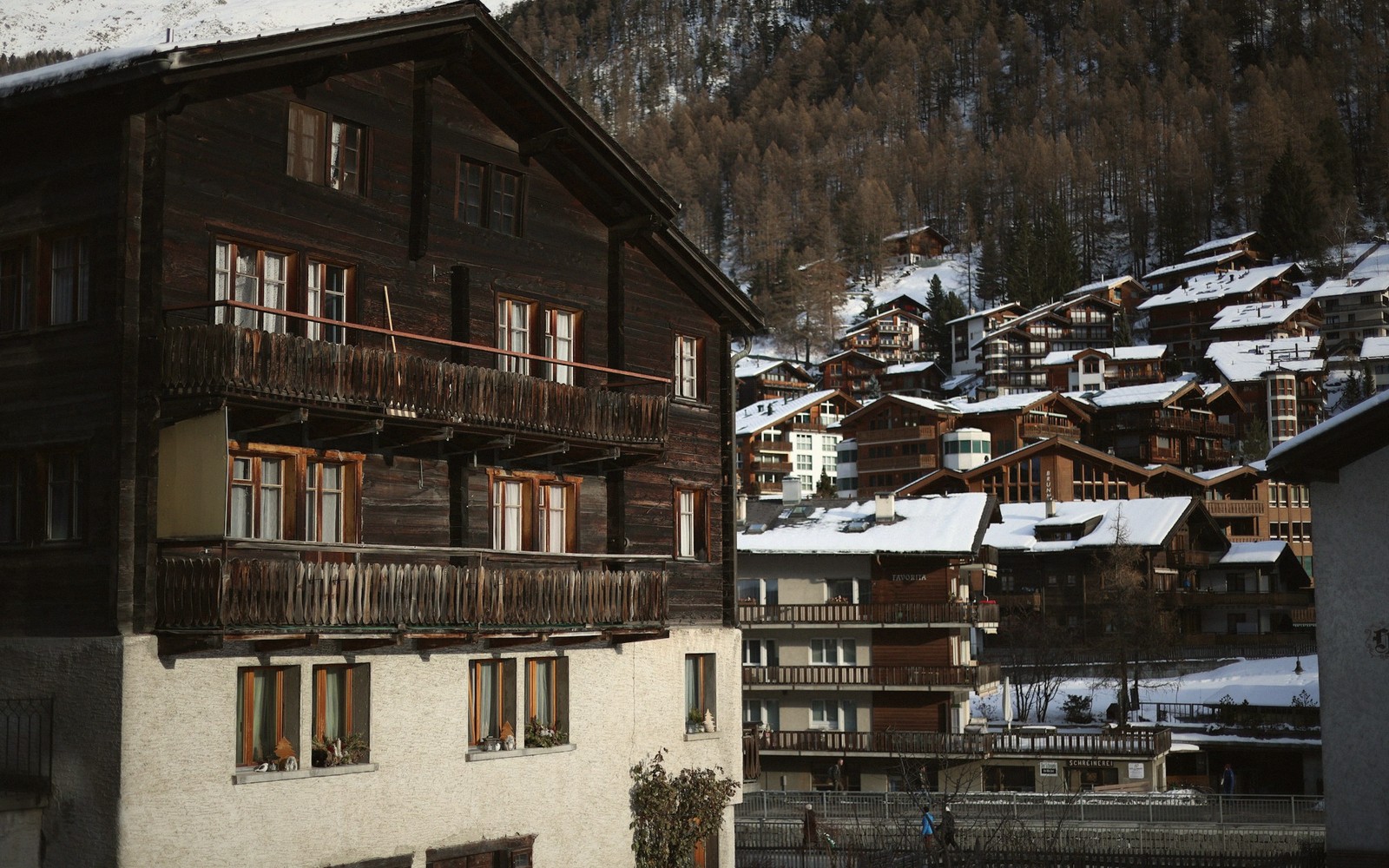
The light, the wind and the altitude: how to read what the mountain is telling you about its snow at Saint-François-Longchamp.
1What south-facing really means
Saint-François-Longchamp sits on a south-facing flank of the Maurienne, looking across the valley toward the Lauzière massif. That orientation is both its gift and its puzzle. The village gets extraordinary winter sun — even in January, the terrace at mid-mountain fills with light by mid-morning — but the same sunshine that makes the place feel generous is also working constantly on the snow surface. Learning to read that relationship is what separates a good day here from a great one.
The resort runs from around 1,450 metres at the village up to roughly 2,550 metres on the high ridges, and altitude changes everything about how the snow behaves. Down in the village, a sunny February afternoon can turn groomed piste to heavy slush by three o'clock. Several hundred metres higher, the picture shifts. Higher still, above 2,000 metres and onto the open upper mountain, you will often find snow that has stayed genuinely cold through the day — wind-packed and grippy on north-east-facing flanks, crystalline and fast where the morning sun hasn't yet reached.
The practical message: never judge the whole mountain by what you find at the bottom.
2Reading the conditions as you go
Local snowfall here comes mostly from Atlantic fronts pushing east and south-east, and from Mediterranean systems that travel up through Italy and hit the Maurienne from the south. These two sources produce different snow. Atlantic snow arrives wet and relatively warm, often heavy and dense at lower altitudes, transforming within a day or two into something workable. Mediterranean systems, rarer but dramatic, dump large quantities that can consolidate quickly in the cold air above 2,000 metres into something closer to the dry powder of a high-pressure cold snap.
Wind is the other teacher. The Col de la Madeleine, the great pass that rises behind the resort, funnels weather efficiently. A brisk south-westerly after fresh snow will scour the exposed upper ridges and deposit slab on the lee sides — a situation the pisteurs monitor carefully, but one that also means sheltered pockets collect untracked windblown snow long after the main pistes have been tracked out. The runs that drop into the treeline — through Le Grand Bois and into the Les Envers sector — tend to hold snow longer, protected from both direct sun and desiccating wind.
Temperature inversion is worth watching too. On cold, still nights the Maurienne valley floor below can fill with fog and frigid air while the resort sits above it in clear, milder conditions. This is actually ideal for the snowpack: the cold firms the night-groomed surface without driving temperatures so low that early-morning snow feels like sandpaper underfoot. When you wake to cloud in the valley and clear sky above the resort, expect excellent groomed snow until well past noon.
3The daily rhythm and how to use it
South-facing terrain has a dependable daily clock. On clear days, the sun hits the lower village runs early and hard; these will be best skied immediately after the lifts open, when the grooming is still intact and the surface hasn't begun to soften. By mid-morning, move up. The upper mountain holds cold snow into the afternoon, particularly on anything that faces north or east. As the sun swings round in the afternoon, the same sequence plays out in reverse — upper runs begin to soften while the lower mountain, now in shadow, can firm up again quickly.
If you are chasing off-piste quality, the logic is the same but the stakes are higher. Fresh snow on a south-facing aspect can skin over and then collapse underfoot within twenty-four hours of strong sunshine. The same snow on a sheltered north-east bowl above 2,200 metres will stay skiable for days, sometimes a week or more. The slopes of Le Grand Domaine include enough varied aspect and altitude that a single lift pass can take you through half a dozen different snow conditions in one morning — provided you pay attention to where you are pointing and what time it is.
4The bigger picture: spring snow
For experienced skiers, the most underrated condition at Saint-François-Longchamp is spring snow on a clear March or early April day. When overnight temperatures fall below freezing and the morning sun arrives on a well-consolidated snowpack, the surface passes through a narrow window — perhaps forty minutes to an hour — of something close to perfect: firm enough to hold an edge, soft enough to turn with ease, the crystals sparkling with a sugary texture the French call neige de printemps. Set your alarm, be on the first lift, and you will find runs that feel like they were pressed from a different mountain entirely. That light, and that snow, are worth travelling for.